
'Tis the Season to Be Not So Jolly
Written by Maya murali
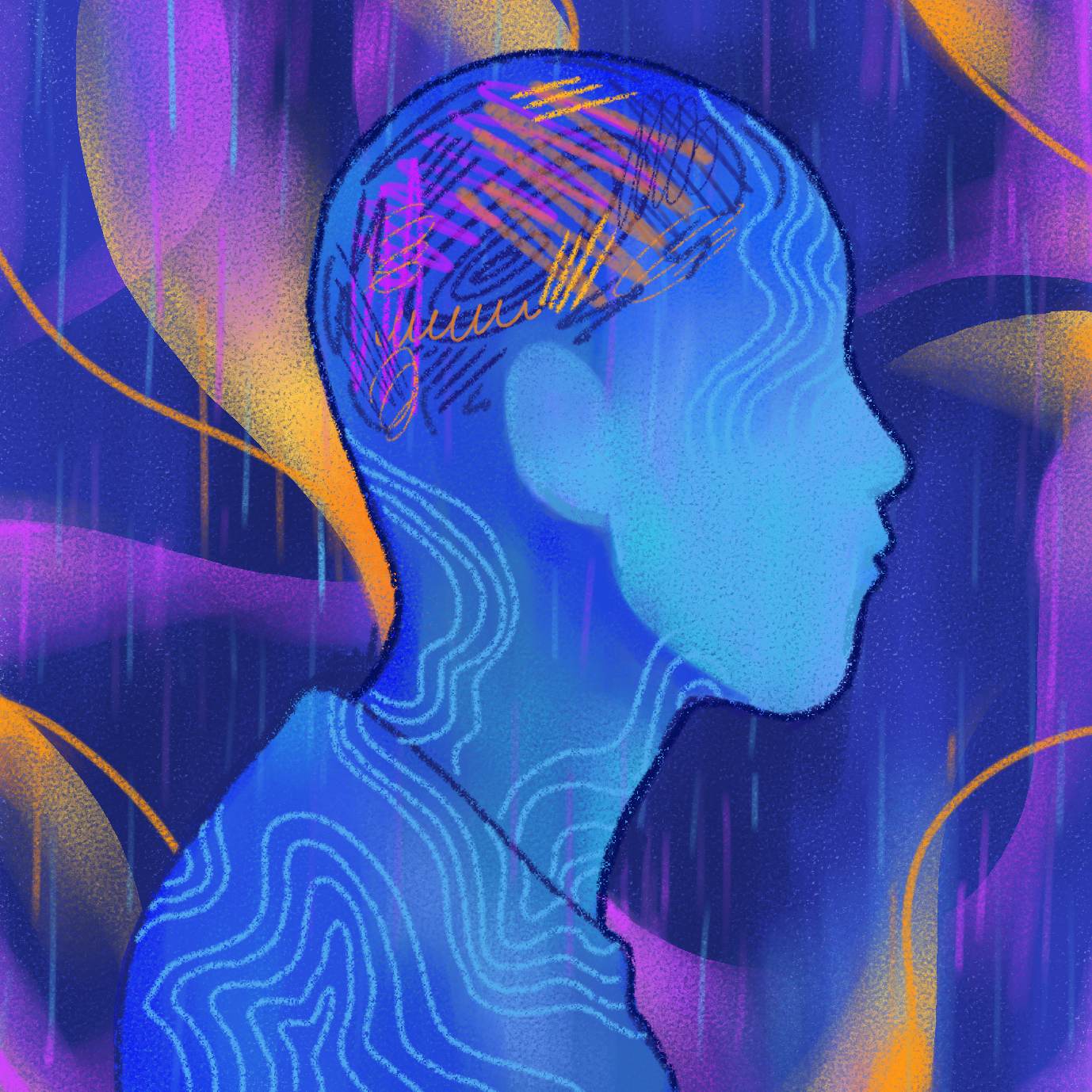
Illustration by Hrishita Das
“It’s just the winter blues!”
If you find yourself repeating this phrase like a mantra as you trudge through the days, feeling less like Santa’s on the way and more like one of his overworked elves, welcome to the (slightly depressed) club. But how do you tell the difference between a couple of gloomy days and something deeper, like seasonal affective disorder (SAD)? Let’s break down the causes, symptoms, and treatments for seasonal depression.
How to Recognize SAD
Seasonal Affective Disorder, or SAD, is a type of depression characterized by its seasonal nature. About 5% of Americans deal with SAD, while 10-20% experience milder forms of winter blues. Millions of Americans are affected every winter as the days get shorter and colder, and access to sunlight becomes limited. Although we don’t quite know the exact causes of SAD, research suggests that lack of sunlight can throw off our circadian rhythms, causing hormone imbalances that can affect mood, behavior, concentration, memory, appetite, and more.
While the winter blues are more common and less serious, SAD manifests itself as persistent symptoms with deeper effects on one’s life. Symptoms include:
● Excessive tiredness, long periods of lethargy, and trouble sleeping
● Heightened irritability and persistent “bad moods”
● Social withdrawal and isolation and lack of interest in previously enjoyed activities ● Concentration or memory issues, like remembering recent lessons
If these symptoms strike a chord or life feels heavy for longer stretches, you might want to ask: is this truly just a bad mood?
College Students as SAD Magnets
College is the ultimate period of change: new classes, new weather for those moving locations, new responsibilities, and changing support systems. Turns out, this perfect storm makes students extra vulnerable to depression. A study of New England students found that around 13.2% of students struggle with SAD, among many other reports that rates of depression among college students are at an all-time high. Combine that with finals, stressors related to going home for the holidays, and half-hearted attempts at meal-prepping, and you’ve got a recipe for a mental health spiral.
All that to say, if you catch yourself doomscrolling TikTok or otherwise searching for an escape, you’re not alone. The good news is, you’re also not helpless: let’s take a look at what can be done to combat SAD, from small habits to campus resources.
Brighter Days Ahead
Feeling stuck in hibernation mode when SAD hits is entirely normal. However, there’s a full toolkit of strategies you can try, from light therapy to daily habits like consistent sleep and spending time outdoors whenever possible.
● Light Therapy: This paper from the Harvard Medical School suggests using light boxes producing artificial white light that mimics sunlight in order to mitigate the effects of SAD. Doing so for around 30 minutes before around 10am in the morning has the potential to increase serotonin levels, as your brain can’t really tell the difference from sunlight.
● Exercise: I know exercise and sleep are purported as the solution for everything, but when it comes to the winter months, exercise is one of the first things that falls to the wayside. Although some activities may be restricted by the cold, staying active is one of the healthiest ways to boost dopamine levels and combat lethargy. It also helps relieve stress and anxiety, which can exacerbate SAD.
● Routine: Maintaining sleep, study, and meals routines can help regulate the body’s internal clock.
● Vitamin D: Although more research is needed, some students benefit from taking vitamin D supplements in the absence of sunlight.
● Antidepressants: If the treatments above aren’t working and SAD symptoms persist to serious levels, it’s worth talking to your doctor about whether medication is a viable option.
Counseling and Mental Health Services at UT
Seeking help early makes intervention easier and recovery more likely. At UT, you never have to deal with SAD or any mental health struggle alone: here are some resources available to all Longhorns, no symptom too small:
● Counseling and Mental Health Center: Located in the Student Services Building, the CMHC offers a variety of services from short-term individual counseling to assessment and referral to other resources. Through the 24/7 Crisis Line and TimelyCare, a virtual service for counseling appointments, psychiatry, and health coaching, the CMHC serves students in many ways.
● CARE Counselors: The Counselors in Academic Residence Program, aka CARE, aims to make counseling as accessible and integrated into students’ lives as possible. CARE counselors are a part of each college at UT and serve the specific needs of those students. They offer individualized counseling, workshops and seminars, consultations, and more.
● Longhorn Wellness Center: The Longhorn Wellness Center, located in the Student Services Building, houses wellness supplies like sleep kits, wellness resource maps, and more.
There’s no perfect roadmap for handling seasonal affective disorder, especially as a college student; rather, it’s a lot of trial, error, and learning what your mind needs. Some days are going to feel heavier than others, especially when winter seems endless and your motivation is stuck in traffic on I-35. But naming what you’re going through is a start: recognizing SAD means you can approach it with real tools, not just wishful thinking.
Most importantly, you’re not alone, and SAD is just one page in the college experience. And if nothing else, remember that winter ends, spring returns, and support is always there.
Citations
National Institute of Mental Health. “Seasonal Affective Disorder.” Www.nimh.nih.gov, National Institute of Mental Health, 2023, www.nimh.nih.gov/health/publications/seasonal-affective-disorder.
Cleveland Clinic. “Seasonal Depression (SAD) | Cleveland Clinic.” Cleveland Clinic, 10 Apr. 2022, my.clevelandclinic.org/health/diseases/9293-seasonal-depression.
Lewine, Howard . “Shining a Light on Winter Depression - Harvard Health.” Harvard Health, Nov. 2019, www.health.harvard.edu/newsletter_article/shining-a-light-on-winter-depression.
Low, K G, and J M Feissner. “Seasonal Affective Disorder in College Students: Prevalence and Latitude.” Journal of American College Health : J of ACH, vol. 47, no. 3, 1998, pp. 135–7, www.ncbi.nlm.nih.gov/pubmed/9830820, https://doi.org/10.1080/07448489809595634.
Flannery, Mary Ellen. “The Mental Health Crisis on College Campuses.” NeaToday, National Education Association, 29 Mar. 2023, www.nea.org/nea-today/all-news-articles/mental-health-crisis-college-campuses.
Johnson, Pete. “How to Manage Seasonal Affective Disorder in College - Pivotal Health.” Pivotal Health, 11 Nov. 2024, pivotalhealth.care/how-to-manage-seasonal-affective-disorder-in-college/.
Mayo Clinic. “Seasonal Affective Disorder (SAD) - Diagnosis and Treatment - Mayo Clinic.” Mayoclinic.org, 2017, www.mayoclinic.org/diseases-conditions/seasonal-affective-disorder/diagnosis-treatment/drc -20364722.